


Practical Insights for Adults Supporting Young People with ADHD
ADHD is frequently mistaken for a lack of discipline or effort, but the reality is a regulation disorder, not a deficit in intelligence or ability. In this webinar, Jay Johnson, Registered Psychologist at The Family Psychology Place, unpacks what ADHD actually looks like in young people and offers concrete, evidence-based strategies for the adults supporting them.
Understanding ADHD
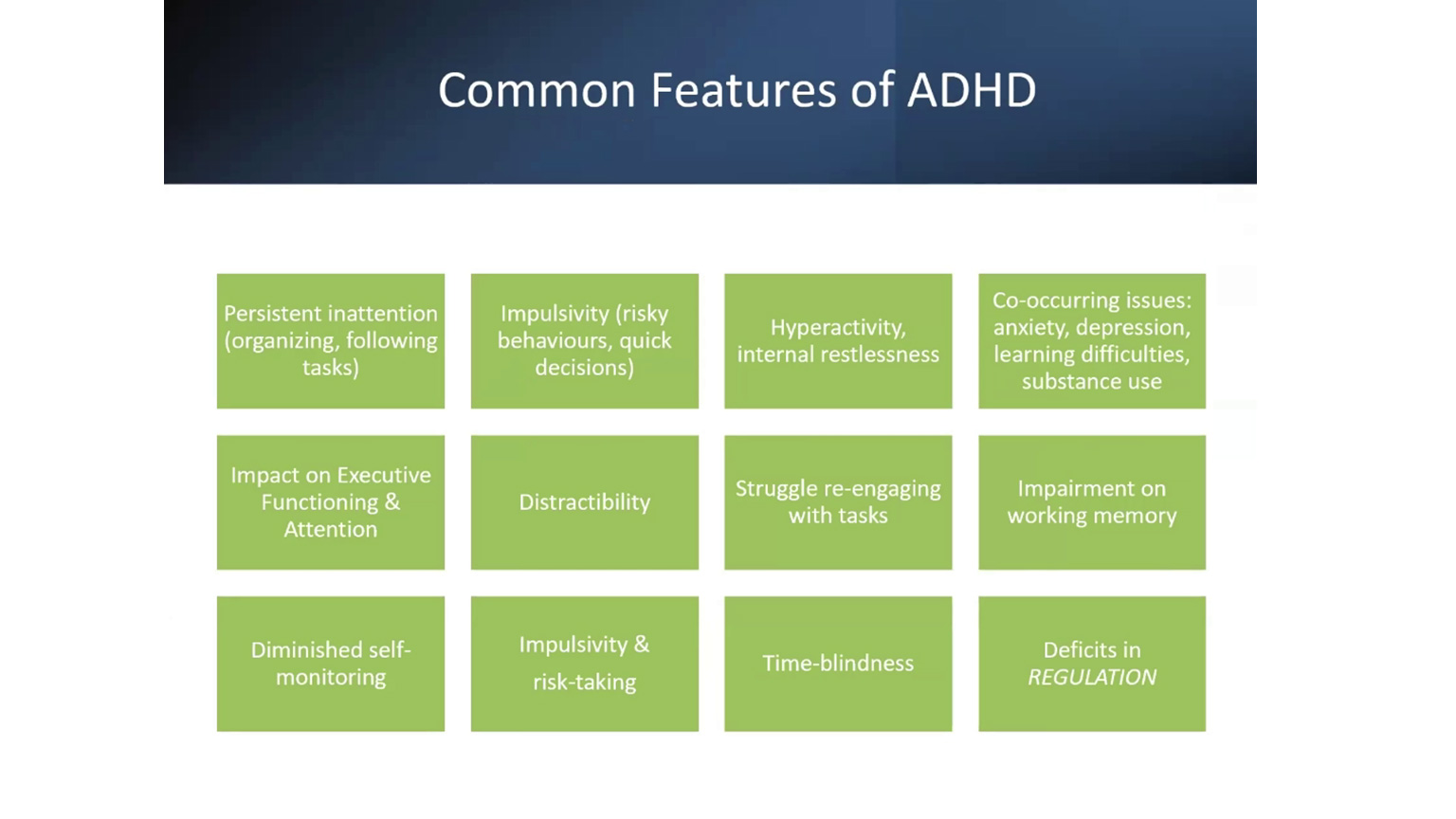
- Core Features: ADHD is defined by challenges with inattention, impulsivity, hyperactivity, and executive functioning — a disorder of regulation rather than a deficit in intelligence or ability.
- Prevalence: ADHD is increasingly common, with national prevalence in Canadian youth ranging from 2.6% to 8.6%.
- Impact on Adults: Caring for young people with ADHD can lead to significant stress, exhaustion, and burnout for parents and educators, and relationships are often strained by reactive disciplinary measures and impulsive behaviors.
Why This Isn’t a Behaviour Choice
Building a strong, trusting relationship is the foundation for all support that follows. Viewing ADHD as a brain-based reality — rather than a behavioral choice a young person is making — is essential for the adults around them to maintain patience and respond effectively, rather than falling into frustration or blame.
Evidence-Based Strategies That Help
Drawing on a treatment model developed by Dr. Russell Barkley, the webinar covers four core areas adults can use to support young people with ADHD:
- Medication: Often highly effective, serving as a “raised floor” for regulating brain function, particularly in unsupervised settings.
- Accommodation: Modifying the environment — timers, checklists, chunking tasks, extra time — to help set individuals up for success.
- Behaviour Modification: Staying calm and modeling coping during emotional dysregulation, using clear “complete reminders,” reinforcing preferred behaviors daily, and — when safe — allowing natural consequences to build self-regulation.
Whether you’re a parent, educator, or caregiver, this session offers a clearer way to understand what’s happening beneath the behaviour — and practical tools for supporting a young person’s success, including where to turn (professional therapy, psychoeducational assessment, and organizations like CADDAC) for further guidance.